Paro Taktsang (Tiger's Nest)
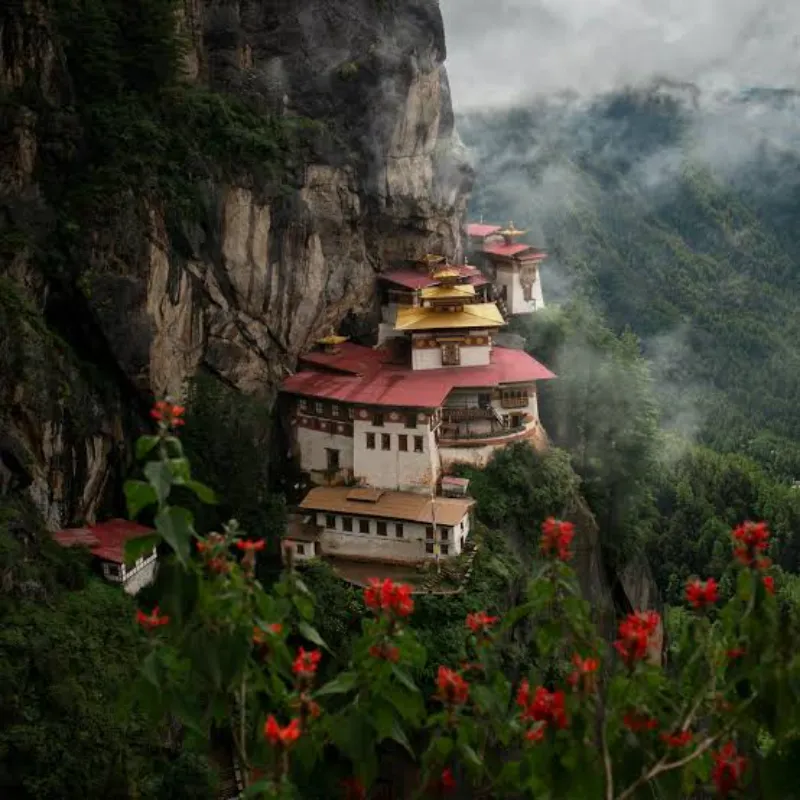
Hanging dramatically onto a steep granite cliff 900 meters above the lush green Paro Valley, Paro Taktsang is undoubtedly the ultimate spiritual and…
Destination Guide
Known locally as 'Druk Yul' or the Land of the Thunder Dragon, the Kingdom of Bhutan is an independent Himalayan nation located on the eastern edge of the mountain range. Famous around the world for valuing Gross National…

About Bhutan
Known locally as 'Druk Yul' or the Land of the Thunder Dragon, the Kingdom of Bhutan is an independent Himalayan nation located on the eastern edge of the mountain range. Famous around the world for valuing Gross National Happiness over traditional economic wealth, this isolated country has successfully protected its pure environment, large forests, and deep Tantric Vajrayana Buddhist…
Known locally as 'Druk Yul' or the Land of the Thunder Dragon, the Kingdom of Bhutan is an independent Himalayan nation located on the eastern edge of the mountain range. Famous around the world for valuing Gross National Happiness over traditional economic wealth, this isolated country has successfully protected its pure environment, large forests, and deep Tantric Vajrayana Buddhist traditions from the rapid changes of the modern world.
The landscape here changes drastically, climbing sharply from the warm, subtropical plains near the Indian border all the way up to the frozen, untouched peaks of the High Himalayas, including the towering Gangkhar Puensum. Massive mountain valleys are cut by clear, fast-flowing rivers, and key locations are guarded by 'Dzongs'—huge, white-walled fortress-monasteries that beautifully combine religious duties, brilliant defensive design, and local government functions.
This destination is perfect for travelers who love rich culture, mountain climbing, and spiritual journeys. Visitors are drawn to the ancient Tshechu festivals, challenging high-altitude treks, untouched mountain wildlife, and a deeply peaceful way of life. The country’s carefully managed 'High Value, Low Volume' approach to tourism ensures it keeps a unique, exclusive, and magical atmosphere that simply cannot be found anywhere else.
Explore the places and experiences that make Bhutan special.
Explore the places and experiences that make Bhutan special.
Explore the places and experiences that make Bhutan special.
Places Worth Exploring
Hanging dramatically onto a steep granite cliff 900 meters above the lush green Paro Valley, Paro Taktsang is undoubtedly the ultimate spiritual and…
Spread out across a peaceful, tree-lined valley next to the Wang Chhu river, Thimphu is an interesting mix as both the official capital and the only real…
Often called the 'Palace of Great Happiness,' Punakha Dzong is widely considered the most beautiful and historically important fortress-monastery in all…
The Phobjikha Valley is a stunning, wide glacial valley carved into the western sides of the Black Mountains. To protect the flight paths of the birds,…
Located on the main mountain road between Thimphu and Punakha at a height of 3,100 meters, Dochula Pass offers incredible, high-altitude views. The top of…
Known everywhere as the spiritual center of Bhutan, the Bumthang area is made up of four linked, high-altitude valleys: Chokhor, Tang, Ura, and Chumey.…
Opened to foreign travelers relatively recently, the untouched Haa Valley is one of the most hidden and traditionally preserved areas in western Bhutan.…
Sitting at a height of about 3,988 meters, Chele La Pass is famous for being the highest road pass you can drive over in all of Bhutan. Cutting a vital…
Paro International Airport serves as the only international entry point to the kingdom and boasts one of the most thrilling and scenic flight approaches…
Phuentsholing is the main border town in southern Bhutan and the primary entry point for travelers driving into the kingdom from India. Located right at…
Simply Bhutan perfectly captures the heart of the kingdom's culture by offering a carefully designed, hands-on experience of its people, scenery, and…
Plan Your Bhutan Trip
From March to May · From September to November
The absolute best times to explore Bhutan are during the beautiful spring awakening (March to May) and the clear, dry autumn months right after the monsoon (September to November). Spring covers the middle-elevation mountains in a stunning…
The absolute best times to explore Bhutan are during the beautiful spring awakening (March to May) and the clear, dry autumn months right after the monsoon (September to November). Spring covers the middle-elevation mountains in a stunning burst of wild rhododendrons, magnolias, and high-altitude flowers, and it also lines up perfectly with the famous Paro Tshechu festival.
Autumn provides unmatched clear skies, bright blue weather, and incredibly sharp, endless views of the snow-capped High Himalayas, along with the return of the rare Black-necked cranes to Phobjikha and the lively celebrations of the Thimphu Tshechu.
The winter months (December to February) bring brilliantly sunny days combined with sharp, freezing temperatures in the central valleys, though there are very few crowds. Meanwhile, the monsoon season (June to August) brings heavy, soaking rains, thick clouds, and an increased chance of landslides on the mountain highways.
Roughly 12°C to 23°C
Spring delivers pleasantly warm weather, bright, blooming flowers across the mountain passes, and the absolute best conditions for trekking. It is also the main time of year to experience the largest Buddhist monastic festivals.
Roughly 16°C to 26°C
The southwest monsoon brings intense, heavy rain showers and thick fog to the southern hills and high mountain passes, turning the valleys incredibly green, though it can sometimes disrupt flights and driving routes.
Roughly 10°C to 20°C
Autumn is widely considered the golden time to visit Bhutan, known for its dry days, perfectly clear mountain views, beautiful golden rice fields ready for harvest, and major religious festivals.
Roughly -3°C to 14°C
Winter brings bright, sunny days that turn very cold at night, often dropping below freezing. Snow occasionally covers the higher passes like Dochula and Chele La, creating breathtaking, pure white mountain scenery.
Paro International Airport (PBH) is the only place to fly internationally into the country, and it is famous for its thrilling, highly visual landing between massive 5,500-meter mountains.
The country's own airlines, Drukair and Bhutan Airlines, run regular international flights that connect Paro to major nearby cities like New Delhi, Kolkata, Bagdogra, Guwahati, Kathmandu, Bangkok, and Singapore.
Even though Bhutan does not have its own train system inside the country, you can get close by using the Indian railway stations located just across the border in West Bengal and Assam.
Hasimara Railway Station (which is about 18 km from the border town of Phuentsholing) and New Alipurduar or New Jalpaiguri (NJP) are the main train stations used by travelers who plan to drive into Bhutan.
You can drive into Bhutan through specific, official border crossing points. The main and most heavily used gateway for cars and buses is the southern town of Phuentsholing (which you reach from Jaigaon, West Bengal).
Other places to drive in include Gelephu in the south-central part of the country and Samdrup Jongkhar in the southeast (which you reach from Guwahati, Assam). Once you cross the border, you will find well-kept mountain highways that wind their way up to Thimphu and Paro.
Bhutan Tour Packages
Let’s create a Bhutan journey around your interests.
Plan a custom tripCustomize your trip, choose the best experiences, and explore Bhutan your way.